Two of Swords Tarot Card Meaning
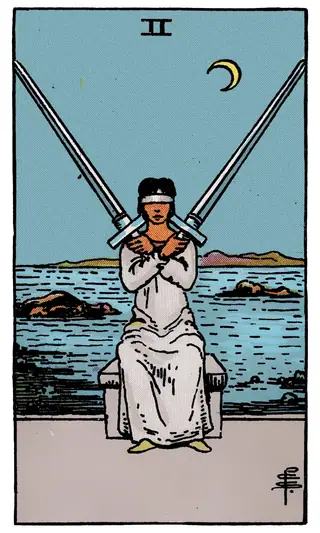
A difficult choice calls for a pause and a careful look at the information you may be avoiding.
Key themes: stalemate, decisions.
Upright meaning
A difficult choice calls for a pause and a careful look at the information you may be avoiding. Name the choice being held at a distance and what information it requires. A temporary pause can protect judgment, but avoidance does not remove the decision.
Reversed meaning
Indecision or information overload can prolong a stalemate; identify the choice that needs attention. Notice whether new information is breaking a stalemate or pressure is forcing a premature choice. Clarify one priority before trying to resolve everything.
Love and relationships
Upright
An avoided choice may be keeping a relationship in a holding pattern.
Reversed
A difficult decision may be becoming unavoidable as tension builds.
Career
Upright
Competing options require information rather than indefinite postponement.
Reversed
Overload or indecision may be preventing a practical work choice.
Yes or no
Upright
Pause. A decision needs facts you have not yet weighed.
Reversed
Pause. Reduce the options and address the choice directly.
Compare related cards
- Ace of Swords: Two of Swords centers stalemate and decisions; Ace of Swords turns toward clarity and insight. A fresh insight or honest conversation cuts through confusion and opens a clear direction.
- Three of Swords: Two of Swords centers stalemate and decisions; Three of Swords turns toward heartbreak and truth. Painful news or an honest realization may need to be acknowledged before healing begins.
Frequently asked questions
What does the Two of Swords tarot card mean?
The Two of Swords tarot card points to stalemate and decisions. Upright, a difficult choice calls for a pause and a careful look at the information you may be avoiding.
What does Two of Swords reversed mean?
Reversed, the Two of Swords card suggests that indecision or information overload can prolong a stalemate; identify the choice that needs attention.
What does Two of Swords mean in love?
In a love reading, Two of Swords upright suggests that an avoided choice may be keeping a relationship in a holding pattern. Reversed, a difficult decision may be becoming unavoidable as tension builds.
Is Two of Swords a yes or no card?
Upright, Two of Swords leans Pause: A decision needs facts you have not yet weighed. Reversed, it leans Pause: Reduce the options and address the choice directly.